
Diving Morotai: Experts Reveal the Hidden Coral Treasures Around Metita Resort
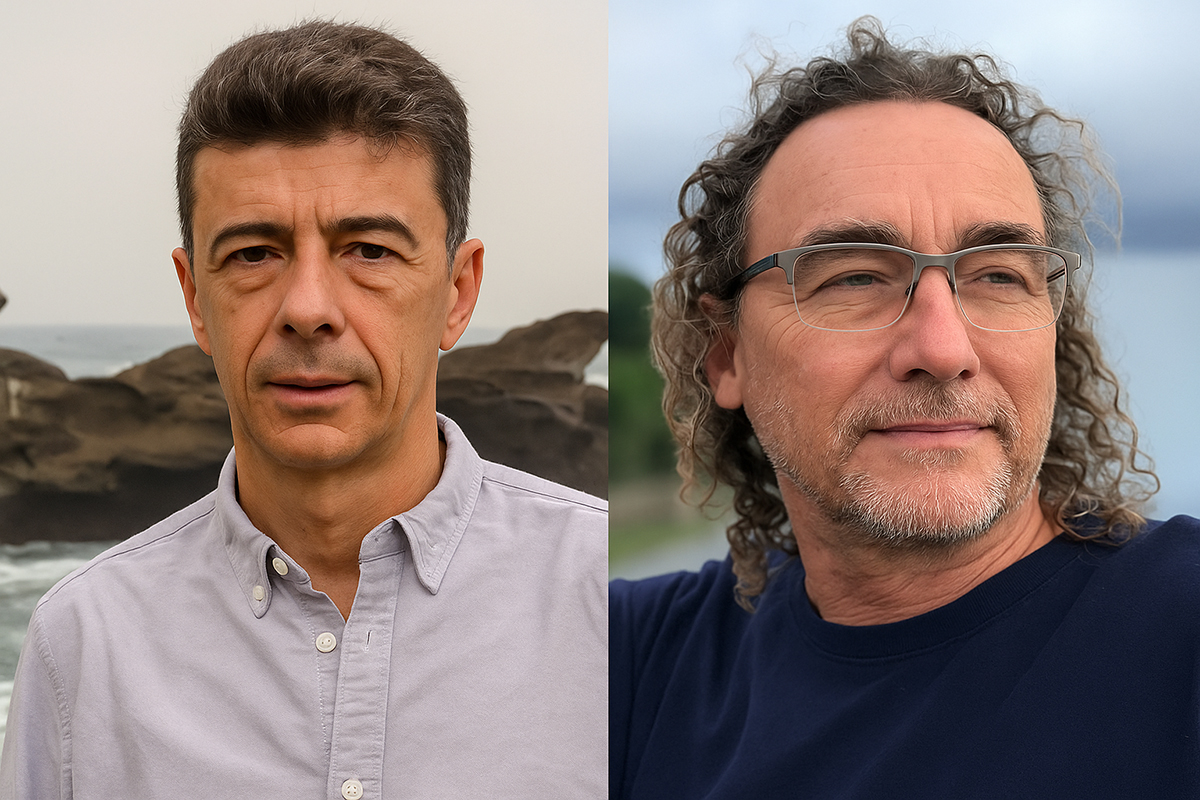
In September 2025, Metita Resort welcomed two of the world’s leading coral reef experts, Vincent Chalias founder of Ocean Gardener, and Russell Kelley creator of BYO Guides. Both have dedicated their careers to understanding and protecting coral reefs through education, research, and restoration.
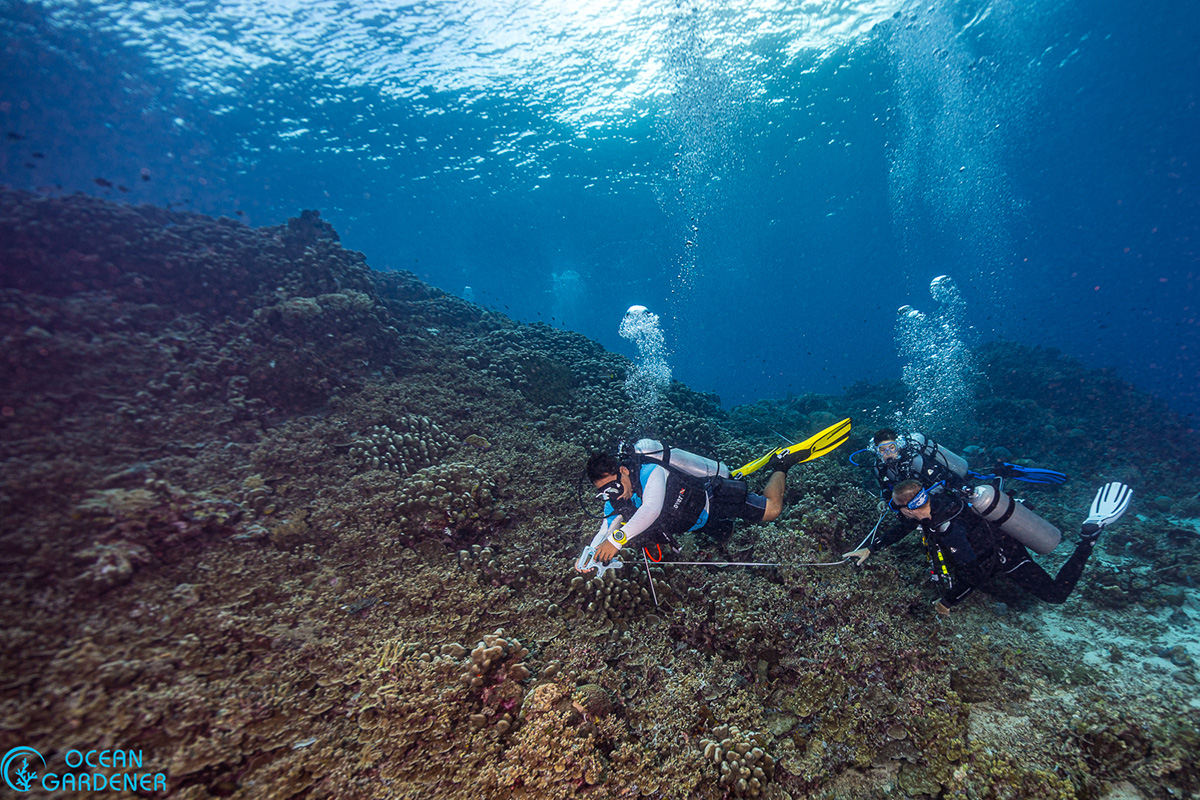
During their stay, Vincent and Russell explored the reefs surrounding Metita Island and Dodola, documenting their findings in a detailed reef health report. Their discoveries confirmed that Morotai’s reefs are not only incredibly diverse but also resilient.
We invited Vincent and Russell to share more about their work, their impressions of Morotai, and their thoughts on the future of coral reef conservation.
1. Meet the Experts
-
Could you each tell us a little about yourselves and your work?
Vincent: Ocean Gardener is a non-profit organization specialized in coral reef restoration and education. Our focus is on training young Indonesian marine biologists in coral ecology, reef restoration, and mariculture. After completing my Master’s in Marine Aquaculture, I created Indonesia’s first in-situ and ex-situ coral farms and have spent the past 25 years farming and studying corals.
Russell: My company, BYO Guides (short for Be Your Own Guide) produces easy-to-use identification tools for coral reefs. We’ve published the Coral Finder, Octocoral Finder, and Reef Finder, which are now used globally. Since 2011, my wife and I have trained over 2,000 people in coral identification. Our approach is visual and intuitive, which helps break language barriers and makes coral science accessible to everyone.
-
What led you to dedicate your careers to coral reefs?
Vincent: I’ve always been fascinated by coral life. What began as a mariculture project grew into a lifelong mission to protect coral ecosystems and help others understand their importance.
Russell: I worked as a coral reef scientist but soon realized I wanted more creative freedom. BYO Guides became my way to merge science and communication, turning technical knowledge into something everyone can engage with.
2. Discovering Morotai’s Reefs

-
What made you interested in exploring Morotai and the reefs around Metita?
Vincent: We came across Reef Check surveys from about 15 years ago reporting that Morotai had some of the highest coral cover in Indonesia. That immediately caught our attention. We wanted to see if those conditions still existed and if we might even discover new coral species.
Russell: My background is in coral reef geology, and Morotai sits where the Pacific, Eurasian, and Indo-Australian tectonic plates meet. It’s literally the collision point of worlds, geologically and biologically. That makes it an incredible place to study coral biodiversity.
-
Before arriving, what did you expect to find? And did the reefs live up to your expectations?
Vincent: I expected a mix of Coral Triangle and West Pacific species, with high coral cover and that’s exactly what we found. The reefs are healthy and diverse, and the water flow around Metita is just right for coral growth, strong enough to feed them, but gentle enough for comfortable diving.
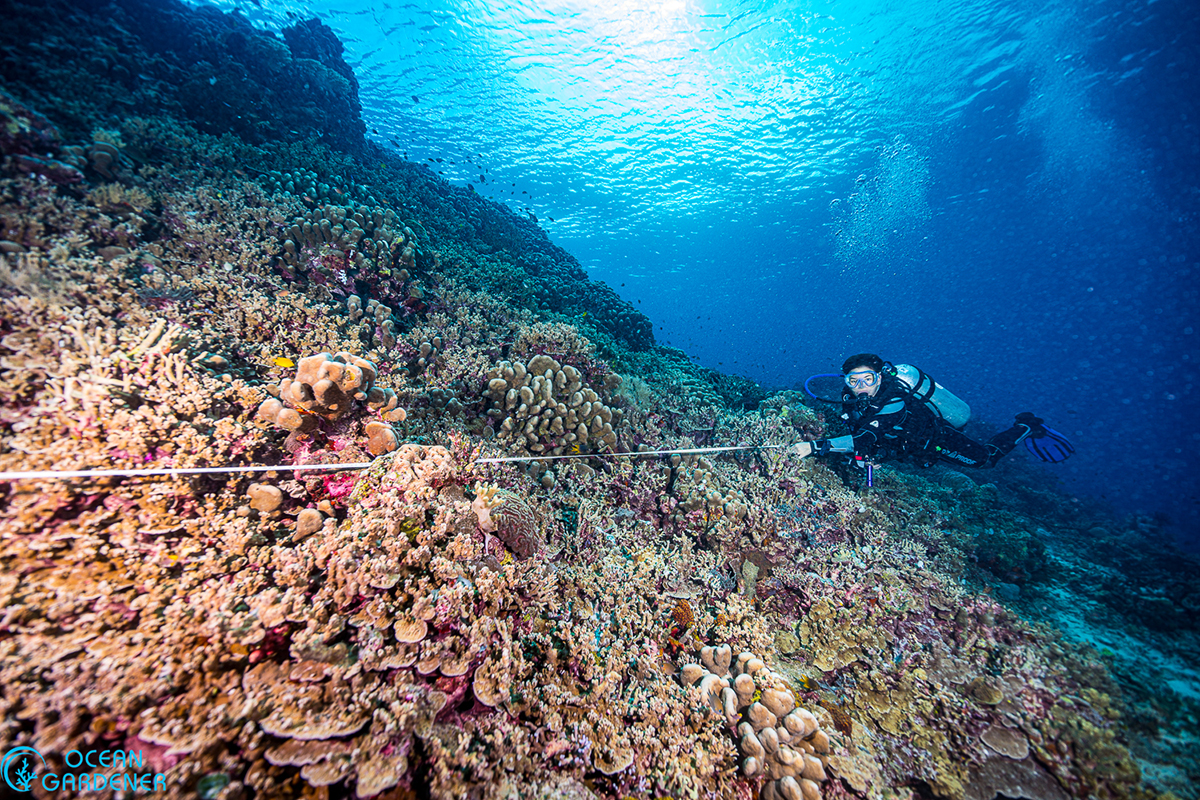
Russell: Where coral communities were less affected by bleaching, the colonies were enormous and beautifully formed. Large, mature corals like these are essential because they produce the larvae that replenish reefs after stress events.
Their reef report supports this observation. It highlights the reefs of Metita and Dodola Islands as particularly healthy compared to those closer to the mainland, where signs of bleaching and nutrient runoff were more visible. Encouragingly, large numbers of juvenile corals were recorded, clear evidence of ongoing natural recovery.
-
How does Morotai compare to other coral reef areas you’ve studied in Indonesia and worldwide?
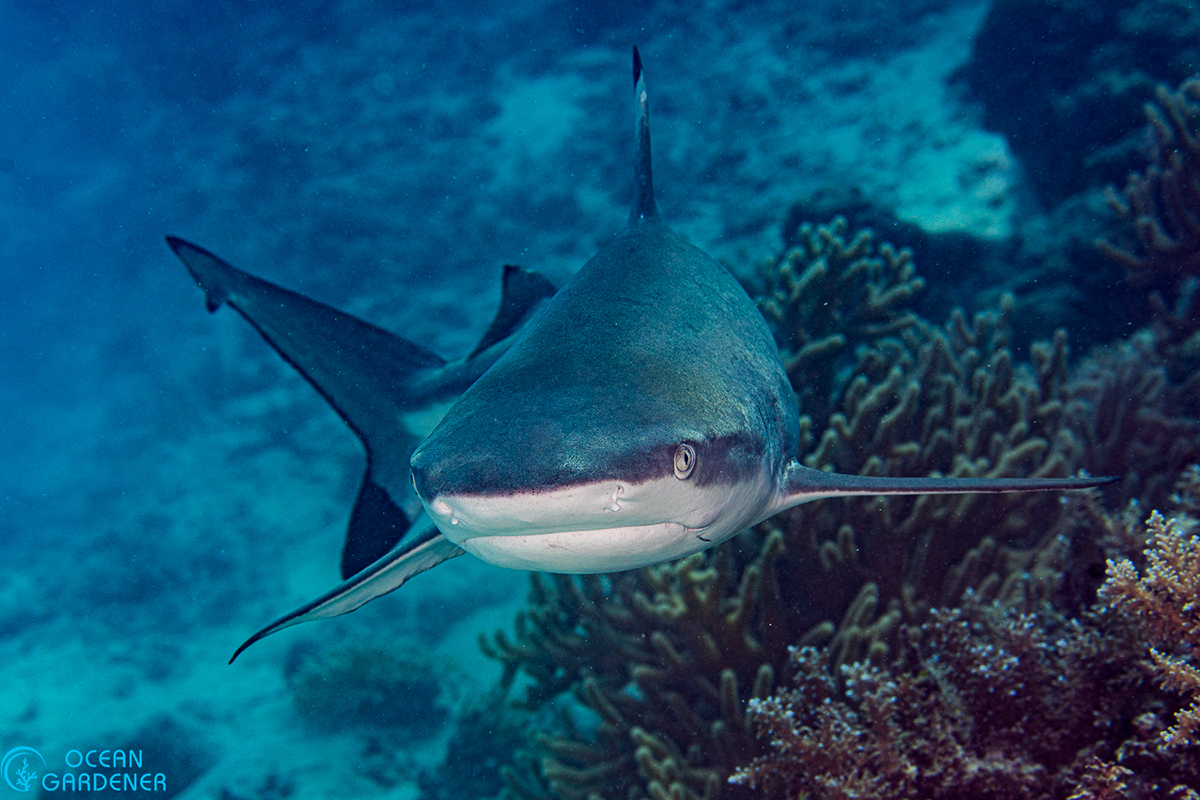
Vincent: Morotai stands out for its diversity and for the abundance of sharks. We encountered blacktip and whitetip reef sharks regularly and even a tawny nurse shark, my first sighting of that species in Indonesia. The coral communities are also fascinatingly varied: soft coral gardens on wave-exposed sides and dense hard coral formations where the current is calmer.
Russell: What struck me was the combination of geological drama and biological richness. Morotai’s location gives it species you can’t find outside the Coral Triangle. It’s a place that still feels wild and full of potential discoveries.
Vincent: In fact, coral recovery here seems to have outpaced central Raja Ampat after last year’s bleaching. I’d say Morotai’s corals are now as healthy as Raja Ampat’s, and shark life may even be better. With a bit more fish management, this could easily be one of the top dive destinations in Indonesia.
3. The Importance of Coral Reefs
-
Why are coral reefs so important, both for marine life and for people exploring them?
Vincent: Coral reefs are the foundation of tropical marine ecosystems. Without coral, there are no fish. They occupy less than 1% of the ocean floor but support around 25% of all marine species. Their role in biodiversity and coastal protection is irreplaceable.
Russell: I often say reefs are the Rainforests of the Sea. They’re not only ecologically rich but also accessible, anyone can dive and experience them. Managed well, sustainable tourism lets people witness this beauty while contributing to conservation.
-
What can divers and non-divers learn from experiencing coral reefs firsthand?
Vincent: Many divers see coral as background scenery for the big animals, but with a bit of education, they start to recognize patterns (hard vs. soft corals, different growth forms) and soon realize that every reef is unique. That awareness changes how people dive and how they treat the environment.
Russell: When you spend time observing closely, you start noticing relationships (shrimp living on sea cucumbers, snails camouflaged on sea fans) everything is connected. These partnerships have evolved over millions of years. They’re a living lesson in balance, recycling, and coexistence, lessons that go beyond the ocean.
4. Conservation and the Future of Morotai
-
What are the main challenges and opportunities for coral reef conservation in this region?
Vincent: The biggest issue is management. There’s no formal MPA enforcement yet, and some areas suffer from overfishing. The reefs themselves don’t need active restoration, they just need protection. Setting up moorings, managing fishing zones, and controlling Crown-of-Thorns starfish outbreaks would go a long way.
Russell: Education should be at the heart of conservation here. Local guides, communities, and guests can all play a role when they understand what’s at stake. This island is still pristine enough to get it right from the beginning.
Their report echoes this perspective, recommending closer collaboration with local NGOs, improved sewage treatment, solar energy adoption, and citizen science activities for guests such as coral ID workshops, spawning monitoring during the March–April and November–December seasons, and simple coral gardening using broken fragments after storms.
-
Do you see potential for future coral research or education programs here?
Vincent: Absolutely. There’s so much to explore: reef connectivity, coral genetics, restoration techniques. Morotai could easily become a research and training hub for North Halmahera.
Russell: Education could even become part of the resort experience. Imagine every guest leaving with a deeper understanding of coral ecology, that’s powerful conservation through tourism.
-
What can divers and everyday travelers do to help protect coral reefs?
Vincent: Support local initiatives and dive operators who follow sustainable practices. The beauty of Morotai is that there’s still room for tourism to grow but it needs to be managed carefully to avoid overfishing and waste issues.
Russell: Take time to learn. Every diver who understands the reef becomes an ambassador for it. That’s how change spreads.
5. Staying at Metita Resort
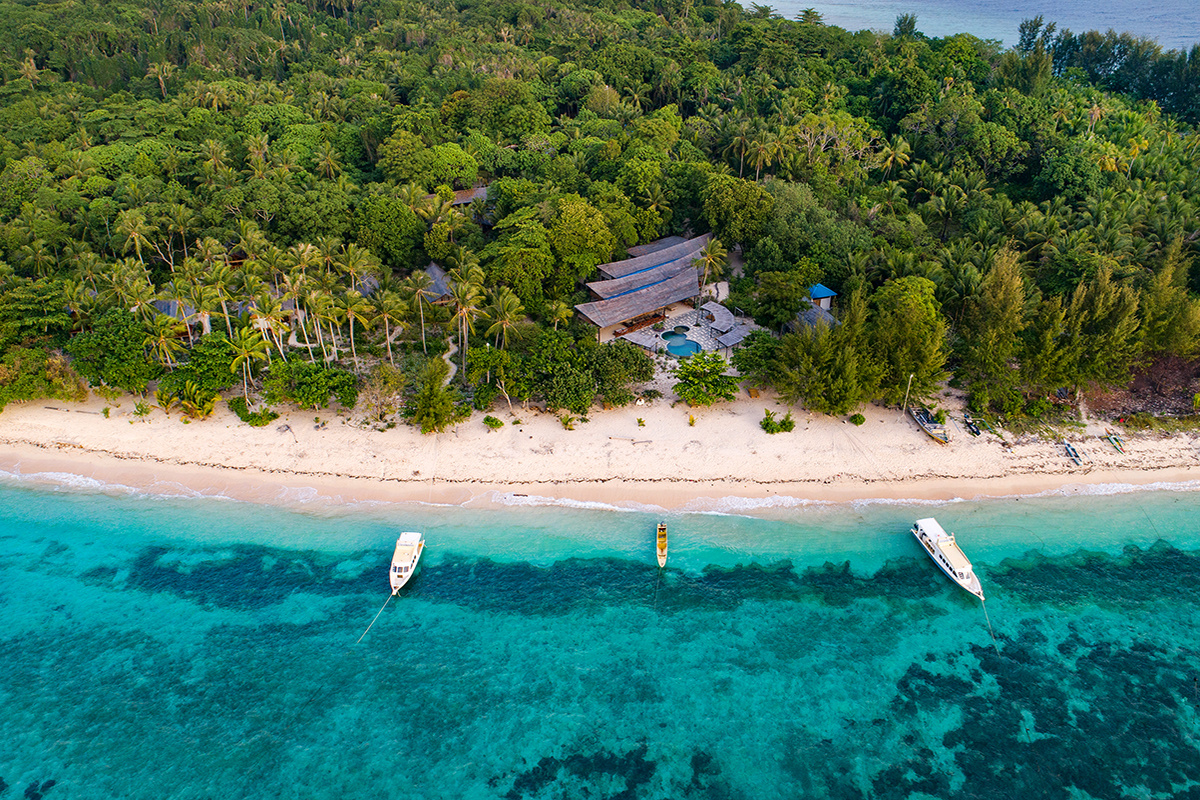
- How was your experience staying at Metita Beach and Dive Resort?
Vincent: It was very pleasant and relaxing. The food was excellent, maybe too good! After three dives and long discussions each day, that dinner felt well deserved.
Russell: Excellent in every way: good facilities, great staff, and delicious meals. We really enjoyed the little European touch of bread with olive oil and tapenade, and the fresh fruit every day was exquisite.
- Did the resort and dive team support your work and exploration needs?
Vincent: Yes, absolutely. The dive team was very helpful and accommodating. They were enthusiastic about learning, and with a bit more training on coral ID and briefing techniques, they could become exceptional.
Russell: Everyone was supportive from the dive guides to the boat crew. Perhaps a little more awareness about handling camera gear like dome ports, but otherwise, everything ran smoothly.
- Outside of diving, what did you enjoy most about your stay?
Vincent: The food and the peace. After a long day underwater, there’s nothing better than sitting on the terrace listening to the waves.
Russell: For me, it was the relaxed rhythm of life. The setting is beautiful, and the staff make you feel genuinely cared for.
6. Reflections and Messages to Readers
- What message would you like to share with our guests and readers about your experience in Morotai and the importance of protecting these reefs?
Vincent: This part of the world will likely be one of the last places where coral reefs remain healthy in the face of climate change. The conditions are excellent, the diversity is exceptional, and the remoteness has protected it so far. Take your time when you come here, stay longer, dive deeper, and really discover it.
Russell: The reefs around Metita are still special, and the whole experience (warm water, calm seas, abundant life) has a kind of magic. It invites you to slow down and reconnect with nature. As Vincent said, staying longer isn’t just a travel tip; it’s the key to truly understanding a place like this.
Closing Thoughts
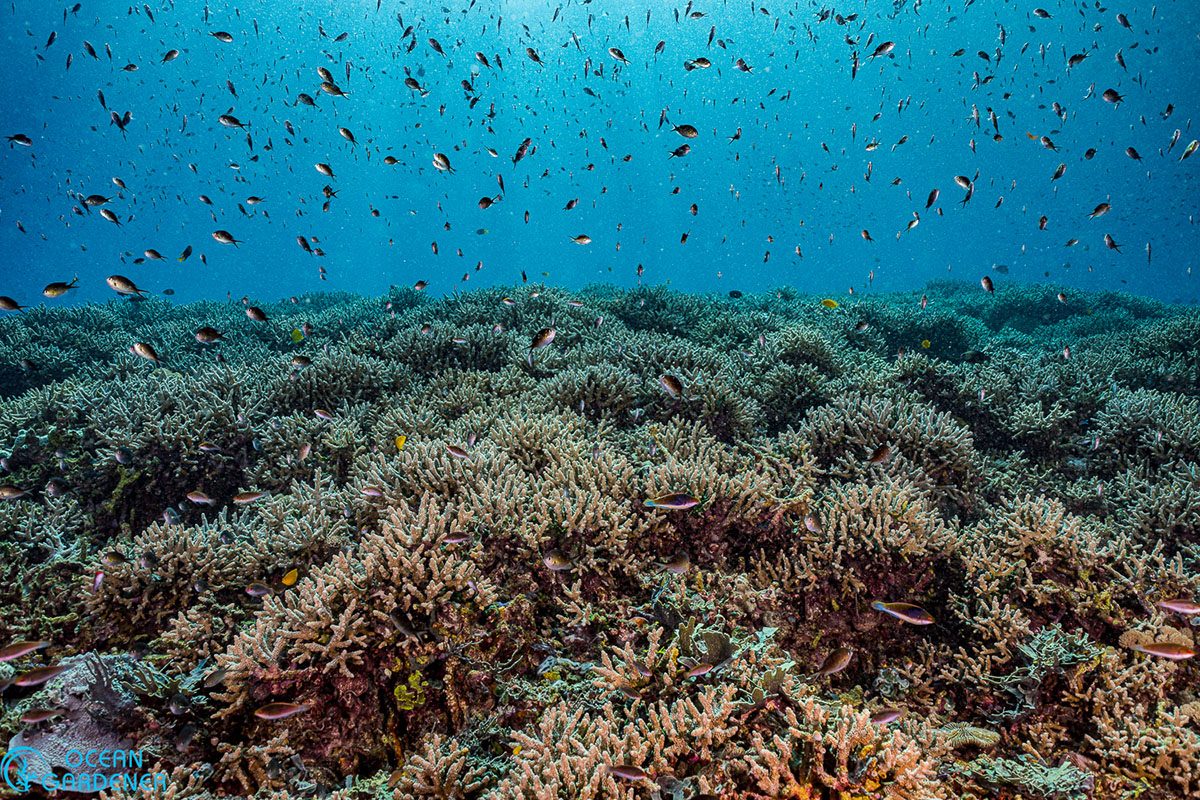
Vincent and Russell’s visit confirmed that Morotai’s reefs are among Indonesia’s most extraordinary marine ecosystems, alive with color, character, and promise for the future.
Their insights remind us that coral reefs are not just destinations for divers, but living communities that depend on our respect and care. Through education, sustainable tourism, and small acts of participation, each visitor can help protect this underwater paradise.
If you’ve ever dreamed of exploring untouched coral gardens, swimming alongside reef sharks, Metita Resort invites you to discover Morotai’s hidden underwater world for yourself. Come dive and let the beauty of these reefs remind you why protecting them matters.